Curiosity. Brought to you by dinosaurs.
Join Little Stomp Club. Enjoy six mindfully-crafted games where three- to five-year-olds learn about dinosaurs and flex their little brains on every adventure.
There are no scores, no timers, no ads and nothing to buy inside.
You're on the list.
We'll only email you about Little Stomp Club, and never pass your address to anyone else.


Six worlds where the Jurassic meets preschool.
A triceratops builds helicopters. A stegosaurus runs a corner shop. Every world is built around something worth learning, then handed to a dinosaur with no relevant qualifications. The palaeontology is researched and the jokes are free.
Great art, with considerably more dinosaurs.
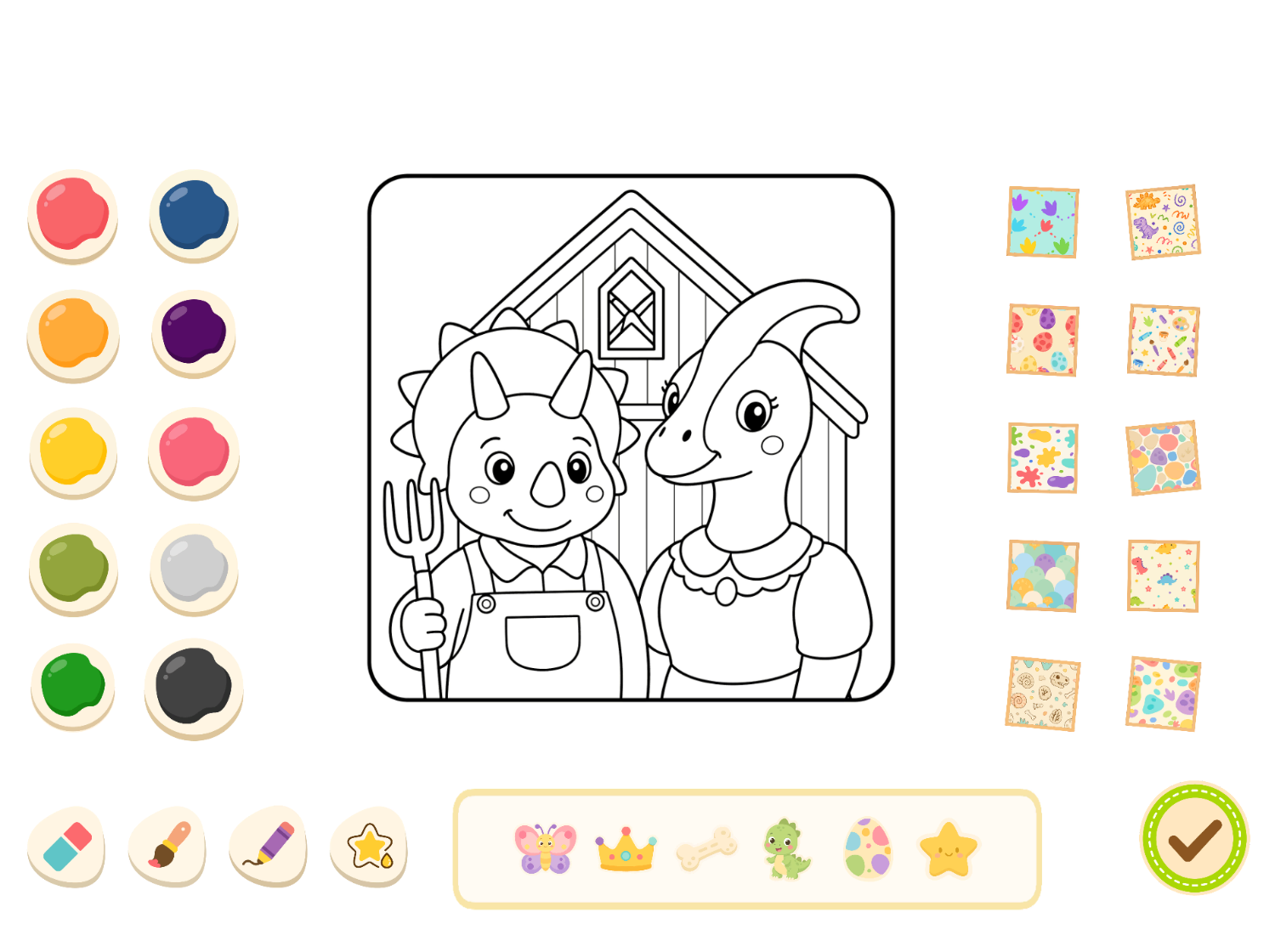
A colouring studio stocked with the finest art in the world and restaged with dinosaurs in it. The Mona Lisa. American Gothic. A balloon dog, because why not?
A child can paint, crayon, pattern and sticker. Every finished one gets a frame in a museum that belongs to them alone. You will be given a tour of it. Several times.
A shopping trip that teaches a child to read.
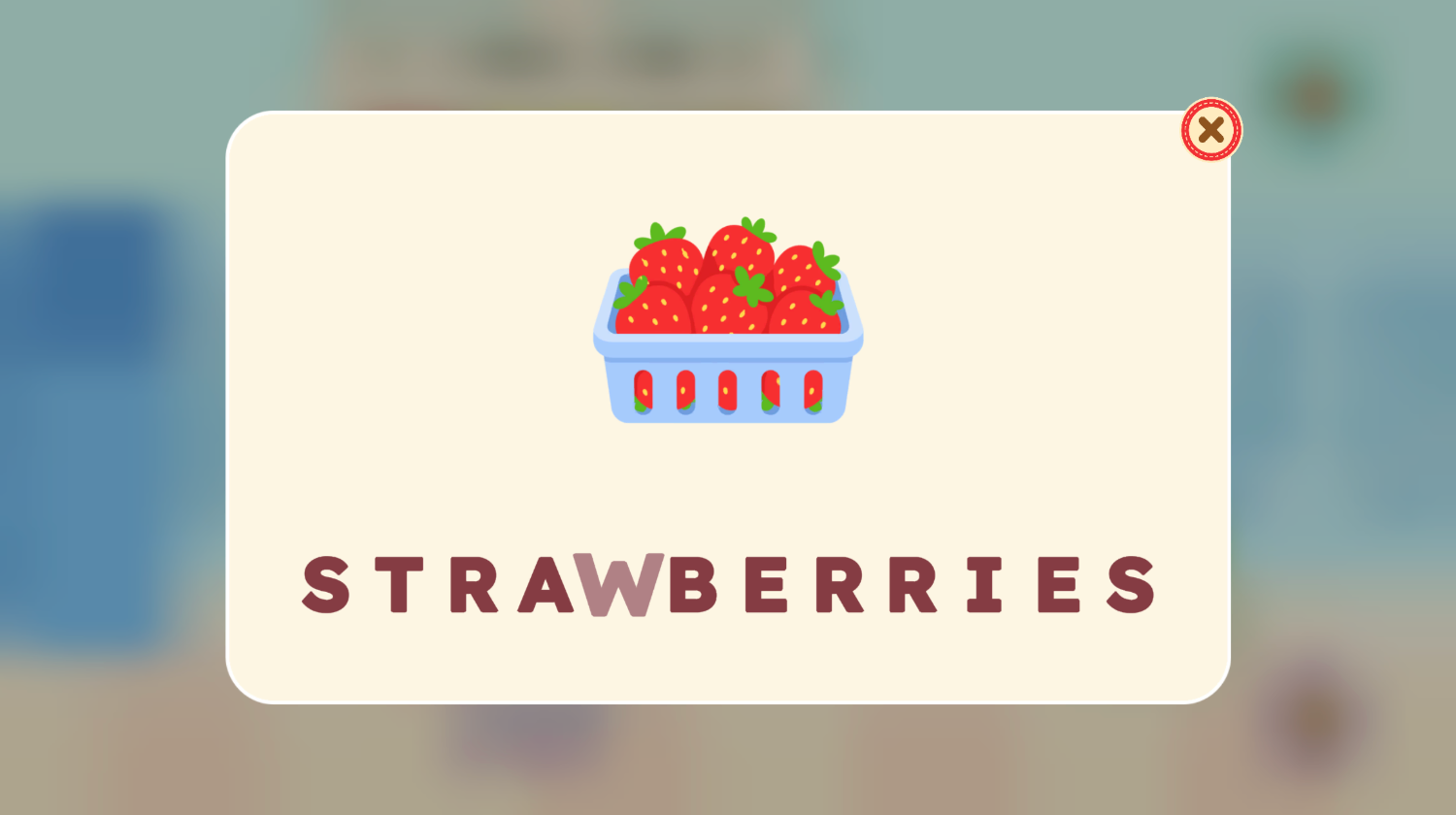
A general store with a reading button. Tap anything in the trolley and the word rises up whole, then sounds itself out letter by letter, at the pace of a three-year-old.
Then the stegosaurus leans over the till and asks for something yellow, and the aisle turns into a puzzle. Expect to be asked, in a real shop, whether a banana starts with B.
Where the idea came from
Researchers put playful question signs in Philadelphia supermarkets, asking children about the food on the shelf. Parent-child talk rose by a third, for around $20 a store. Supermarkets are full of print, numbers and names, and talking about them is where reading starts.
Ridge, Weisberg, Ilgaz, Hirsh-Pasek & Golinkoff (2015), Mind, Brain, and Education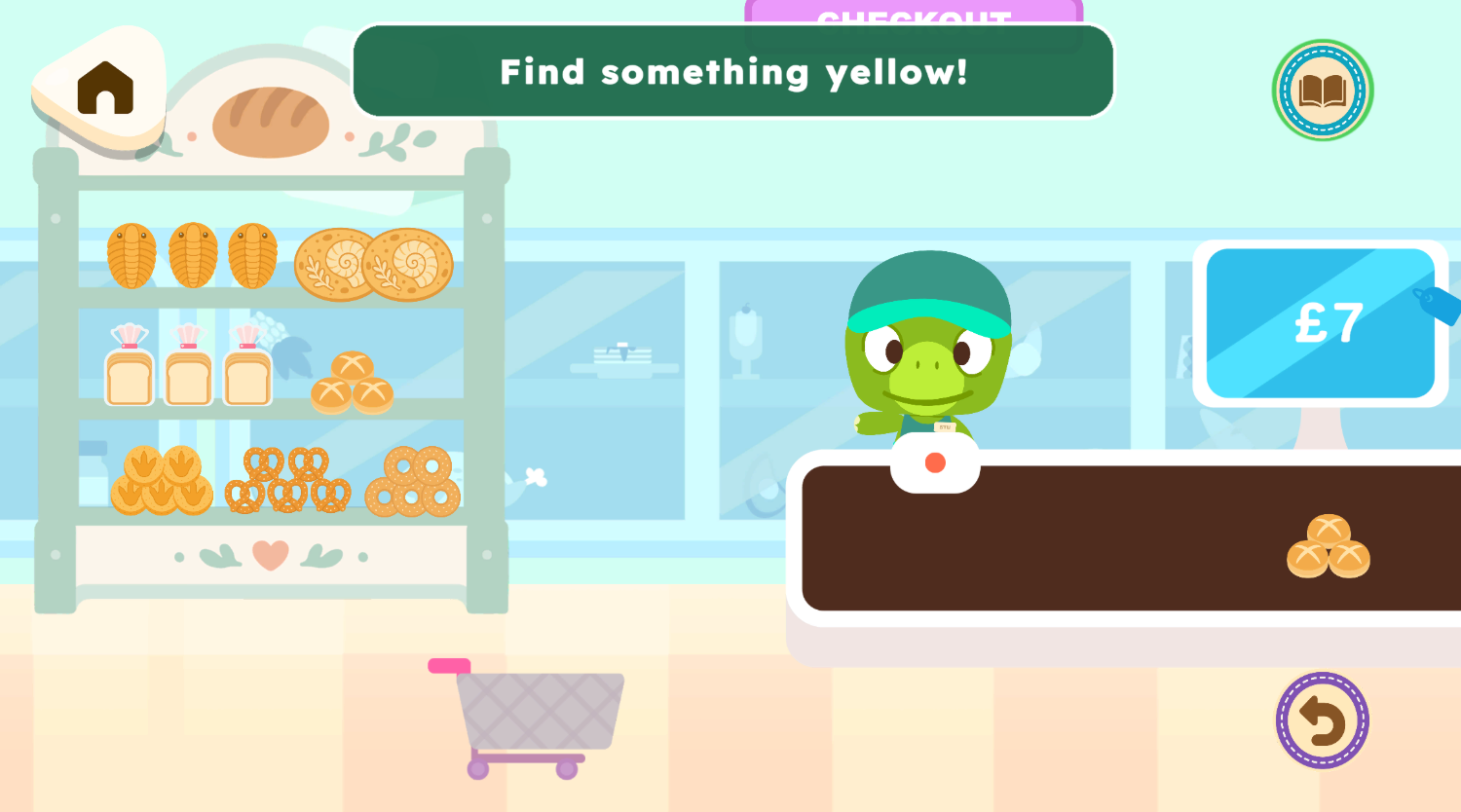
Down where the water starts to glow.
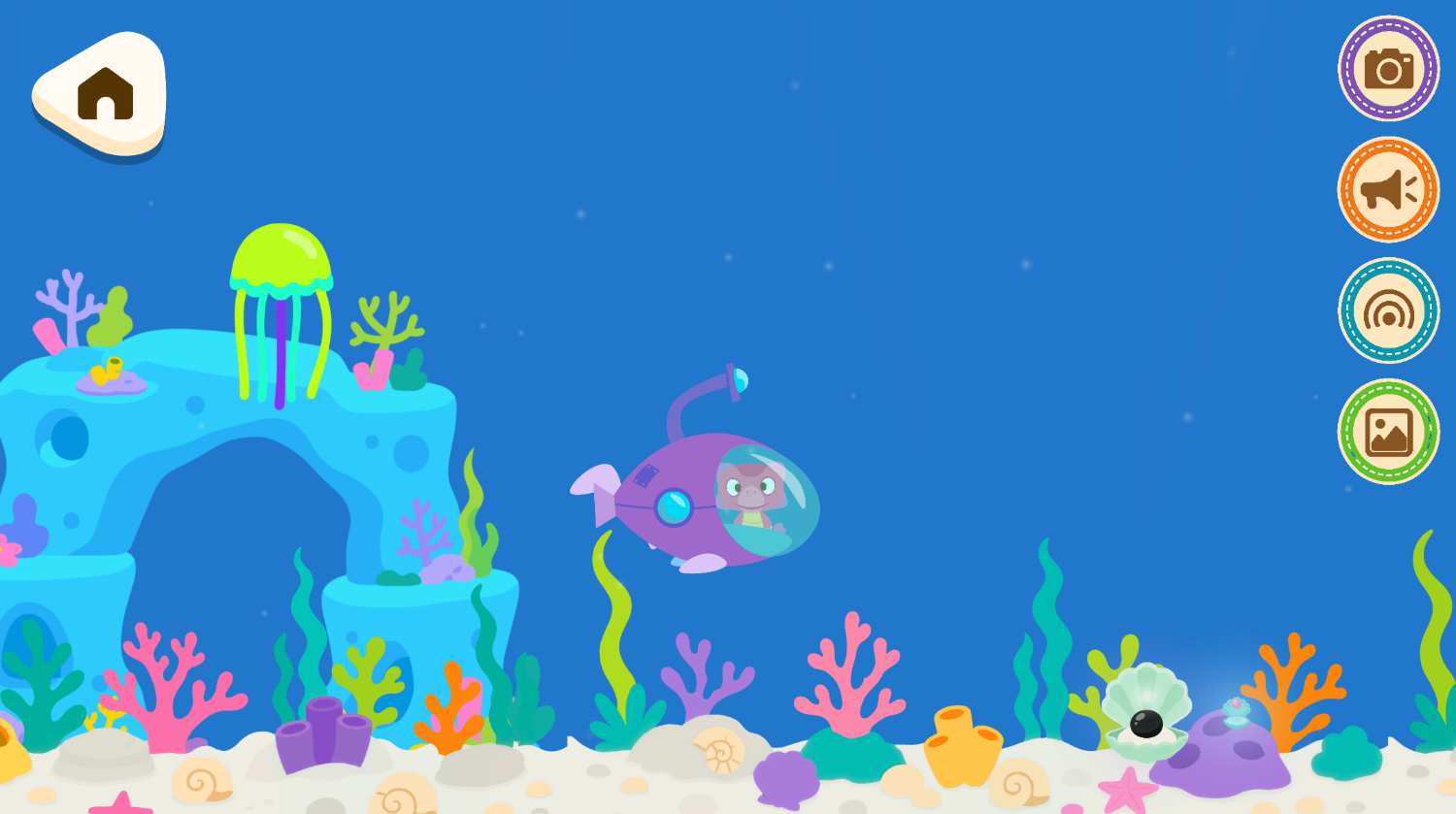
A submarine, and permission to take it as deep as they dare: past the reef, past the light and into the dark where everything is luminous.
Meet jellyfish, ammonites, eurypterids, orthocones and other critters – each from a real period of the Earth's history. Photograph one and it goes into the log journal, which is how a small person ends up saying eurypterid at dinner.
Build whatever you like. Then work out how.
Choose a vehicle and it appears in the workshop as an outline waiting to be filled in. A helicopter wants you to fill in the missing screws before flight.
Fetch the part, match it to its place and pick the right tool. Counting happens along the way. Helicopters are inspected before being signed off. Standards are high.
Why sorting matters
Grouping things by how they are alike and different is named as an essential early literacy and maths skill, and matching by attribute is the first step towards logical reasoning.
NAEYC, Exploring Math and Science in Preschool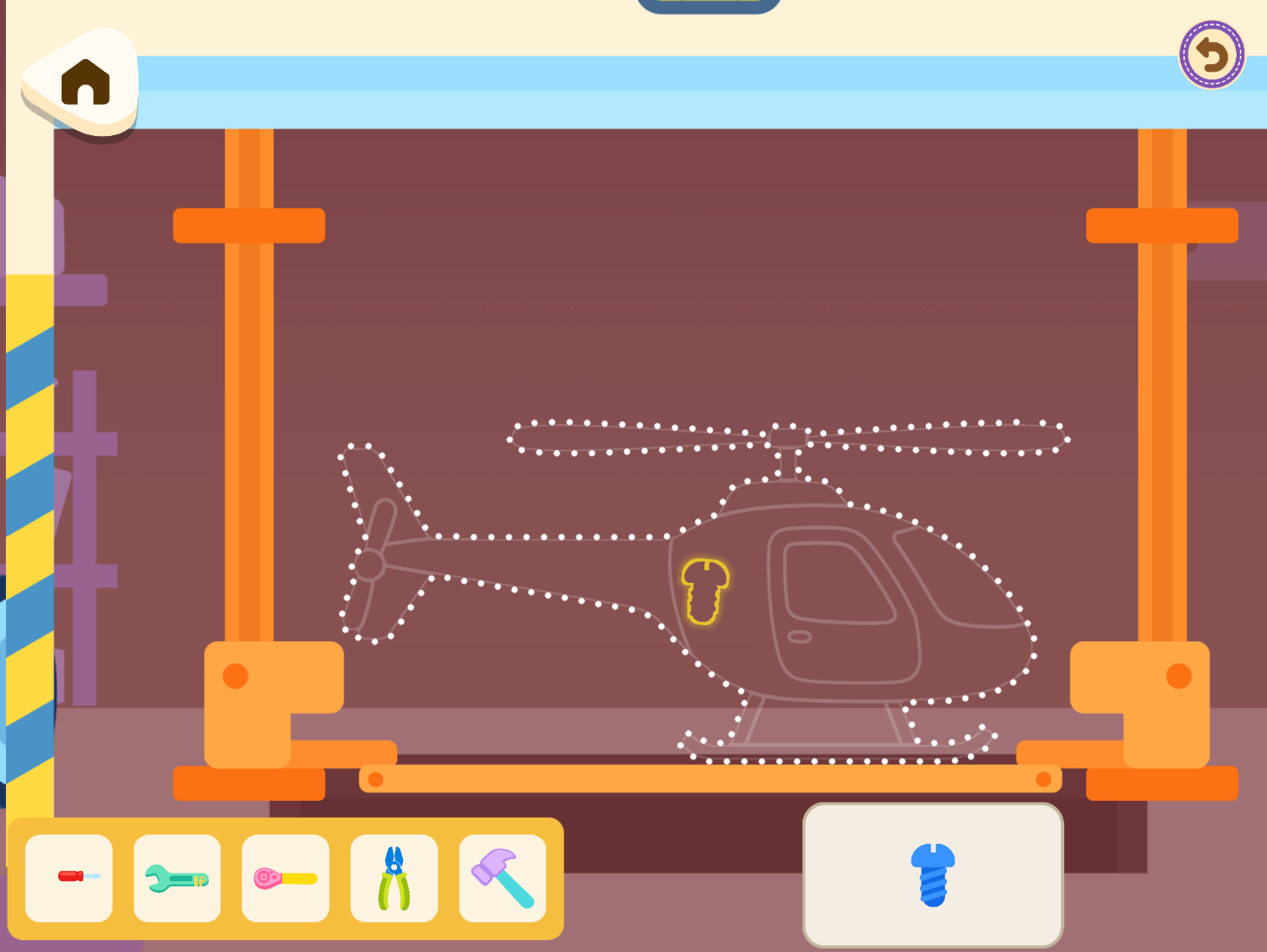
Everything buried has a name.
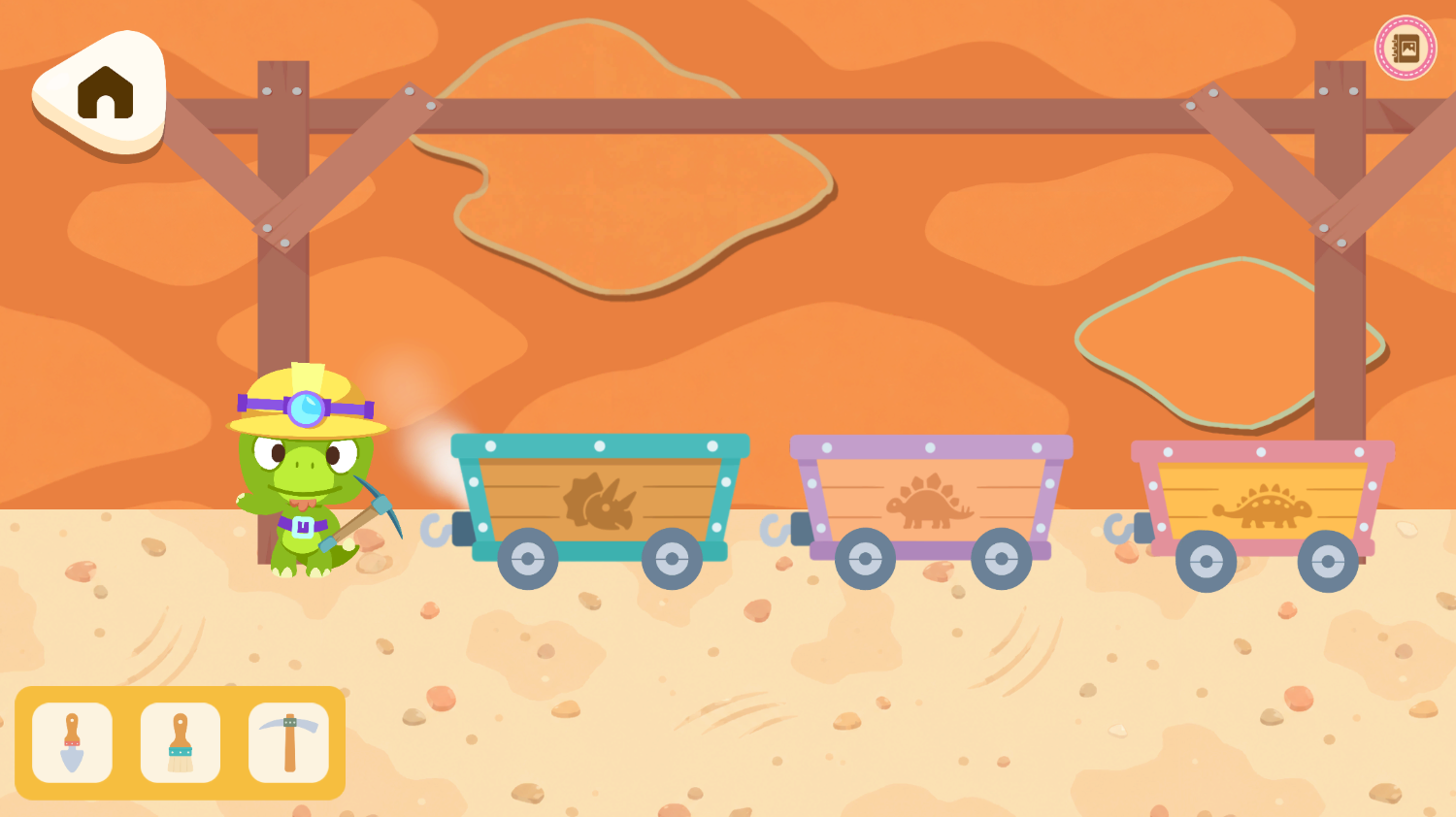
A trowel, a brush, a pickaxe, and a mine that goes down as far as they feel like taking it.
Every gem and every fossil that comes free is named and explained and then mounted in a scrapbook that stays theirs. Collecting is the hook. The names arrive with it, and ammonites will be produced from a pocket at some point.
And a world where your imagination roams free.
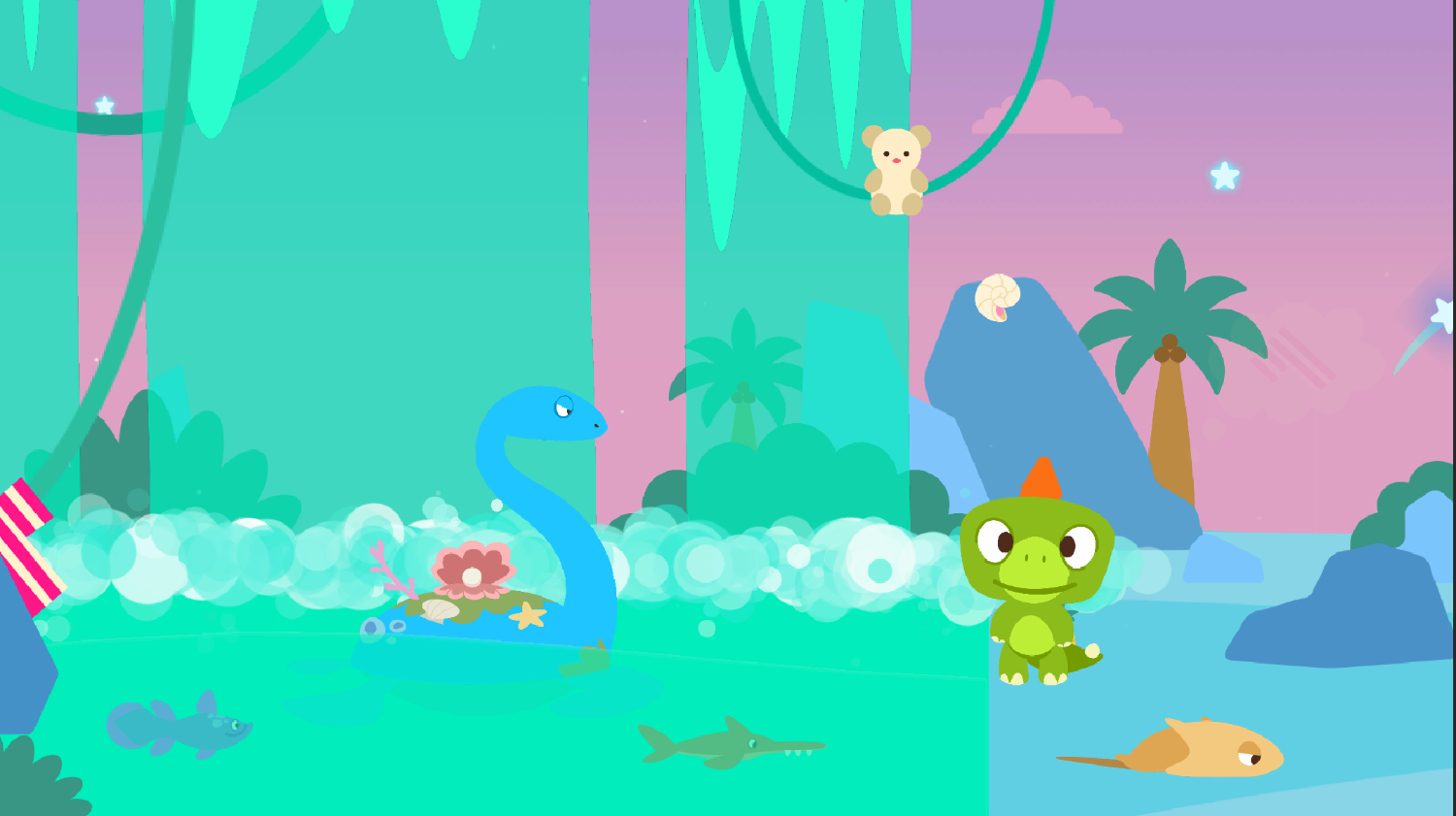
A jungle, a lagoon and dinosaurs who need to be put to bed. Solve the quiet puzzles. There is no task, no prompt and no gold star at the end of it. Some children go straight here and stay.
Where the research and the story meet.
Every world began with published work on how three- to five-year-olds actually learn, and the game was designed backwards from the finding. We worked with leading behavioural paediatricians from the very start.
The rise in parent–child talk when question signs went up in Philadelphia supermarkets, at a cost of roughly $20 a store. Beep is built on that finding.
Ridge, Weisberg, Ilgaz, Hirsh-Pasek & Golinkoff (2015). Supermarket Speak: Increasing Talk Among Low-Socioeconomic Status Families. Mind, Brain, and Education.Grouping objects by likeness and difference is described as an essential early literacy and maths skill, and matching by attribute as the first step in logical reasoning. Vroom is a sorting game in a workshop apron.
NAEYC, Exploring Math and Science in Preschool.Every dinosaur is drawn from the fossil record, then handed a beret or a shop apron. Children learn the real animal and remember it because it made them laugh.
Species, period and anatomy checked against the palaeontological record.Five friends who turn up everywhere.
They aren't tied to one world each. Real species, properly drawn, then given jobs they are wholly unqualified for. Going by their Latin names until we announce the proper ones.

T. rex
Wears the beretA. magniventris
Drives the minecart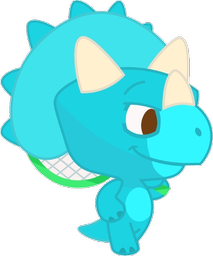
T. horridus
Builds the helicopters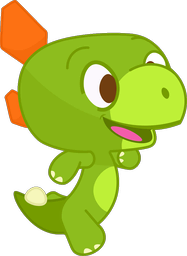
S. stenops
Works the tillP. antiquus
Pilots the submarineThe quiet kind of screen time.
You are the one paying for it, so here is the plain version.
No ads, ever.
Nothing is for sale inside and nothing flashes for attention. The world is only ever the world.
No in-app purchases.
Nothing at all to buy inside. No surprise buttons, no coins, no pestering you from the back seat.
No way to fail.
You cannot lose, get stuck or do it wrong. Nothing in here has ever made a small person feel small.
No timers or scores.
No streak to protect and no clock running down. Two minutes or twenty makes no difference to us, though it may to you.
Plays offline.
Download it once and it works on the plane, in the car and at the back of a long queue. No signal needed.
Made for little hands.
Large tap targets, soft sound, and a pace built for three to five. Designed to be easy to put down, too.
The things grown-ups ask.
Play it before it's finished.
We're looking for families to try the first build and tell us what their children actually do with it. Leave your email and we'll be in touch.
You're on the list.
We'll only email you about Little Stomp Club, and never pass your address to anyone else.